White Collar Handyman
In-Home and In-Office Technology Concierge Services
Lessons & Tutoring • Repair • Troubleshooting • Upgrades & Installation
Fast Response • Reasonable Rates • In Your Home or Office • Same Day Service Available
(781) 989-2373
Hey! We've moved to a new URL to better reflect who we are and what we do! Please visit Rob Falk Technology Concierge Services at http://robfalk.net and update your bookmarks.

Friday, February 10, 2017

It's not you, it's them…

While awaiting the arrival of snowmaggeddon here in the northeast, I had a few clients call me with
It's not you, it's them…
complaints of no email service. That's always disturbing, especially in cases where I have just recently been visiting… and tinkering. "That Rob, he's always tinkering…"

The sudden loss of email connectivity can create quite a panic. But here's the good news: it's almost always temporary, and it usually has nothing to do with your own computer, your settings, or your own in-home/office wifi or network connection.

Definitely an east coast problem
When your email goes down, here's a few things to check:
  1. Do I have other Internet features? Does my web browser still connect? If so, you know your connection is OK.
  2. Can I get my email from the web interface? In other words, if you usually use an "email client," i.e. Mail App, Outlook, Inbox, Cloud Magic…, can I get my mail by using Safari, Chrome, Firefox, etc. (If so, this is almost always an indication that POP/IMAP service is down with your provider, and it will be fixed soon.
  3. Is there a problem with my ISP or mail host? Here's where Down Detector and http://www.downforeveryoneorjustme.com can help.
To see if it's you or if it's them, visit either of these two sites, enter the address of the website and you'll see information that will give you a good indication of whether there's a problem outside of your (or my control) or whether it's something that requires more "tinkering."

Tuesday, March 22, 2016

iOS 9.3 Good to Go!

The most tested incremental update in the history of iOS is ready to download an install.

I haven't heard enough from people with older devices to give you s definitive answer, but if you are already on iOS 9.2.1, there is probably no good reason not to upgrade. Those of you still on iOS 8, as always, maybe wait a bit and we'l see what the pioneers report from the front. Certainly, if you have a 6S or a 6, go ahead and upgrade to 9.3 and enjoy the new NightShift feature which may help you sleep better if (really, IF?) you use your device at night. The last two generations of iPad should also benefit with no downside.

Here's my recommended method for every iOS upgrade:

1. Save all your photos and videos to the cloud or to your computer. There's no sense risking losing them if anything goes wrong, and they're taking up space that could be needed during the upgrade. My practice is to have copies in the cloud and on a hard drive.

2. Remove the apps you never use. It will free up space and declutter your home screen.

3. Make a backup. Check your backup. Your device should be backing up to iCloud every night, but it's a good idea to check, and make sure that you have a current backup. I strongly recommend connecting your device to your computer and making a backup to it using iTunes. It's a more complete backup, and if something goes wrong, it's a lot quicker to restore from iTunes than to restore from iCloud. (I speak from experience. Trust me.)

4. If at all possible, do your update via iTunes. The over the air updates seem to be OK these days, but again, in the event of complications, having the computer and iTunes handy can make for an easier recovery. If you are tight on space on your device, the iTunes update is definitely less of a hassle.

Monday, November 23, 2015

Safer Computers, Tablets, and Phones in Minutes

From time to time, I speak at community centers and social groups on easy and inexpensive ways to tighten up security on electronic devices. It's a 45 minute session that is both entertaining, informative and immediately useful.

I cover:

  • Password Managers
  • using HTTPS
  • OpenDNS & crowd sourced trusted sites
  • 2 Factor Authentication
  • Virtual Private Networks
  • Finding lost devices
  • Hard drive encryption
  • Phishing
  • Scams
  • Malware
Here is a link to the resources I discuss in the body of the talk.

If you think your club, group or community center might enjoy this talk, please send me an email.

Tuesday, September 15, 2015

iOS 9: Getting Ready for the Upgrade

Apple will be releasing iOS 9 tomorrow, and by all accounts, the new operating system for iPhones, iPads, and iPods looks to be a good one. Featuring Ad blocking, a new power saving mode, an update in Siri's abilities and lots more, iOS9 will run on iPhone 4S, iPad 2, iPod Touch 5th gen and anything newer. Early reviews say it may bring new life to the iPhone 4S, perhaps running faster and better than the disappointing performance drop many saw with iOS8.

So… now is the time to get ready.

1. Save all your photos and videos to the cloud or to your computer. There's no sense risking losing them if anything goes wrong, and they're taking up space that could be needed during the upgrade. My practice is to have copies in the cloud and on a hard drive.

2. Remove the apps you never use. It will free up space and declutter your home screen.

3. Make a backup. Check your backup. Your device should be backing up to iCloud every night, but it's a good idea to check, and make sure that you have a current backup. I strongly recommend connecting your device to your computer and making a backup to it using iTunes. It's a more complete backup, and if something goes wrong, it's a lot quicker to restore from iTunes than to restore from iCloud. (I speak from experience. Trust me.)

4. If at all possible, do your update via iTunes. The over the air updates seem to be OK these days, but again, in the event of complications, having the computer and iTunes handy can make for an easier recovery. If you are tight on space on your device, the iTunes update is definitely less of a hassle.

Finally… Maybe just wait! If your phone is critical to your survival (social or business) maybe wait a couple days. Even the finest software on the planet has some… issues… when first released to the public. I guarantee you that not everything will work well for everybody, and that some people tomorrow will really wish they waited for the 9.01 update.

In the past, people have seen problems with extreme battery drain, key apps failing to function, wifi interruption or general unexpectedly slow performance. Why not let the cowboys and thrill seekers check out the new territory and send some messages back from the front. As I've said before, you won't get a prize for updating first, but you may get some surprises. It's better to be a fast follower than a first mover.

Monday, May 18, 2015

Improve your iPhone Security by more than 1 Million Percent?

I like using the Simple Passcode option on my iPhone, but I've always been kind of bugged by the idea that there are only 10,000 possible passwords under that scheme. Since it's always 4 numbers, lots of people tend to use a month/day combination which makes guessing a fairly easy task for many people. Is your first digit 0 or 1? Do your 3rd and 4th digits add up to no more than 31? Is your combination your birth year? Last 4 of your phone number?

If you would like a longer simpler password, here's a cool and easy trick I just learned:

  1. Open Settings on your iDevice and go to "Touch ID & Passcode."
  2. Turn off "Simple Passcode"
  3. Next, change your passcode to something longer, using all numbers.
  4. Enjoy your new improved security!
Look what happens when you get to the lock screen now! Instead of needing to enter your long password with the keyboard (really kind of a drag) you just punch it in on the keypad (not too shabby!) The only difference between this and the simple passcode option is that you need to tap the "OK" after entering your code.

OK, I lied. The only difference is you have to tap OK, and your password is now more than 111,000%  harder to crack! (Assuming you have used 7 digits.) You've gone from 10,000 combinations to 11,111,110. Add one more digit and you've increased the number of combinations to over 100,000 which is more than a One Million Percent increase!

I really like the idea that the length of my passcode is no longer known. While I'd never recommend a 1, 2 or 3 character code, a would be thief/hacker would have to try all of them in order to rule them out. They also need to try all the 5, 6, 7 and so on combos, thereby increasing the amount of time it will take to unlock your phone.

Yes, you may have set your phone to erase all data after 10 failed passcode attempts, so perhaps you're not too worried. Then again, you may have a kid or a wise guy friend who just loves wiping out all your data every so often. Me? I'd rather not have to restore from a backup. And if you're one of those people who says "Back… what?" or doesn't know how to restore from a backup or one of those who knows how long it takes to restore from a backup, maybe you would like to make your password a little bit longer and less obvious than a sentimental date.

Saturday, March 21, 2015

No, Your Computer is NOT "Critically Infected"

This is a bogus alert that seems to be hitting Mac users, and these people will not help you.

They will take a lot of money if you call them and listen to them. There is actually no harm done to your computer by this little bit of javascript trickery.

The damage gets done if you call them and they convince you to give them remote access to your computer so they can "help" you. In fact, all they do is help themselves to private information, and a couple hundred dollars if you then give them your credit card information.

If you find yourself locked up on that page:

  1. Hit Command-Option-Escape.
  2. Quit Safari.
  3. Start Safari with the Shift key down.
  4. Under the Safari Menu, Choose "Clear History and Website Data…"
  5. Clear at least Today and Yesterday
  6. Restart the computer.
  7. Stick to a less unsavory part of the web.

If you have been subject to this phishing/harassment, please let me know, and let me know if this helped. I offer a free 50 minute multimedia presentation called Safer Computers, Tablets and Phones in Minutes to clubs and community/social groups in Massachusetts and Connecticut. Please email or call me if you think your organization would be interested.

Wednesday, October 15, 2014

Which Yosemite Will It Be For You?

As soon as tomorrow, Apple could be releasing it's next generation operating system, Mac OS 10.10. If past performance can be an indicator of future results, then we can expect a few things:

  • It will be free
  • It will have amazing new features that make life easier and richer in oh-so-many ways:
  • Notification center is improved and more like the iOS version
  • The new dock and window translucency is beautiful
  • Spotlight searching will search your computer and the Internet simultaneously
  • iCloud Drive will change the way you use, store and share documents
  • Mail will let you mark up PDFs and send huge files without clogging your recipients' mailboxes
  • "Continuity" is going to make moving between your iPhone, iPad and Mac incredibly simple.
  • You'll be able to make and take phone calls on your iPad and Mac
  • Most people will love it and it will work flawlessly

And, kind of like a prescription drug, you need to consider the "side effects, some serious" of upgrading your OS to a .0 release:

Installing 10.0.0? Say your prayers, varmint…

  • It will take a long time to download.
  • Some people will not be able to download it.
  • Some people will not be able to install it.
  • Some people's computers will stop running.
  • Some people will not be able to print.
  • Some people will lose wi-fi connectivity.
  • Some people's favorite application will not run.
  • Some people's data may be lost.
  • Some people's blood pressure may rise.
  • Some people will experience dizziness and headaches and heart arrhythmia.

Unless you like to live dangerously, why not wait on the upgrade?

In the meantime, make sure you have a good solid backup of at least the things you hold dear: photos, music, documents. Better yet, make a bootable backup of your entire hard drive. And watch here, and around the web as reports on how the move to Yosemite go.

There's no doubt that OS 10.10.1 will be released in the next few weeks and that it will solve most of the problems that people will find in 10.10.0.

If you would like your Yosemite to be more rainbows and waterfalls and less rootin' and tootin' my advice is to make some popcorn, sit back, and see what happens. You'll able to join the party soon enough.

Tuesday, September 16, 2014

iOS 8 is coming. Maybe Wait?

Tomorrow, iOS 8 comes as a free update for all iPhones 4S and newer, all iPads 2 and newer, and the 5th generation iPod touch. As always, my advice is wait and see how others do.

For most of us, it will be fine. But, you never know. Is your phone OK right now? So maybe wait and see what happens to battery life,
Internet connectivity, email and critical apps for the brave ones who "just do it" tomorrow. What do you lose by waiting until those reports are in, versus what could you lose if your perfectly working iPhone stopped working perfectly?

If you are traveling, it's always a good idea to wait until you are back at home. If your phone is one of the rare few that brick, and a few always do, would you rather be home, yelling at your local Apple Genius, or sleepless and phoneless in Seattle, or Austin, or Cleveland (God forbid.)

In law school, my torts professor tried to explain the idea of a "slight risk of grave danger," by pointing to a giant fish bowl full of jelly beans. "Here," he said, "I have a few thousand jelly beans. They are delicious. One of them is made of cyanide, and will kill you quickly. Who would like to try one jelly bean?"

Most people will get grape, or cherry, or lime, or that weird white one… but someone's gonna get the poison one. Back up your phone and be at home before you take that chance.

Thursday, September 11, 2014

50 Million Elvis Fans Can't be Wrong, But 5 Million Might Want to Change Their Gmail Passwords

In the wake of the latest hacker activity (which revealed 5 million Gmail usernames and passwords) perhaps you should check your email addresses at the world's greatest database of compromised accounts. I found that both my Adobe and Forbes accounts had been part of major breaches.

Have I Been pwned is safe, reliable and very useful.

And by the way, if you don't want youngsters snickering at you, please know that the word is pronounced "Owned."

Tuesday, August 5, 2014

The Argument for Phony Security Question Answers (Again)

A seventeen year old kid in Australia recently bypassed Paypal's two factor authentication. This should be troubling news to anyone who engages in financial transactions on the Internet. I've written a thing or two about password management and security on line and have been a strong advocate of two-factor authentication, hailing it as "state of the art" consumer level security.

Two-factor authentication is supposed to mean that "even if someone succeeds in hacking your
password, they won't be able to log in to your account from a device that you haven’t already approved. The log in won’t be allowed until after you receive a text message on your cellphone with a code, which must then be entered in addition to the password." But, not so at Paypal, according to our junior jackaroo.

What happened at PayPal?

As many are aware, PayPal is owned by eBay. As a convenience for their users (i.e., to encourage their users to use PayPal for everything) eBay provides their users with a direct link to their PayPal accounts. Here's the fly in that ointment: apparently eBay does not check to see whether two-factor authentication is enabled before allowing anyone who manages to log in to eBay to shoot right into the linked PayPal account with just a username/password combo.

That may not seem like such a big security hole, since it requires the crook to have your username/password combination at two sites, but that's really not that far fetched if a hacker has been able to gain access to the victim's computer.

It gets worse. According to PCWorld, "The payment processor’s two-factor authentication could potentially be defeated in other ways. For example, if a user doesn’t have a way to receive the six-digit code, PayPal allows them to skip it and instead answer two security questions." Given that most security questions involve questions like "Where were you born?" and "Where did you go to high school?" the illusion of two-factor authentication becomes more and more mirage-like.

I've shared the answer before, but it's time to share it again: How about using your random password generator to come up with a short but random string of characters, and saving it in your password management app?

Mother's maiden name? oL-eF-yeph

Monday, July 7, 2014

Monday, June 30, 2014

iOS 7.1.2 Update for iPhone, iPad & iPod Touch Now Available

According to Apple, latest iOS update includes the following changes:
  • Improves iBeacon connectivity and stability
  • Fixes a bug with data transfer for some 3rd party accessories, including bar code scanners
  • Corrects an issue with data protection class designations of Mail attachments
It also contains "miscellaneous bug fixes and security updates."

You can download the update over-the-air via Settings > General > Software Update or install it via iTunes by connecting your phone to computer using a USB cable. Even though you can update/upgrade directly over the air on your phone, don't. Although it's only a 23.1-megabyte delta update (just the changes, not a whole system file) user experiences with over-the-air upgrades vary, while those who use the tried and trusted USB method seem to be unanimous in their success stories. And, I always like to make a fresh backup to my hard drive first.

Here's the safest way to upgrade/update:
  • Attach the iPhone to your computer.
  • Open iTunes.
  • Click on "Back Up Now."
  • Wait for the backup to finish
  • Click on "Check for update" and then do update to 7.1.2
Because it's a delta update, you shouldn't have to wait to long to get back on the device, with all your data and settings intact.

As always, unless you are absolutely dying to have the listed issues fixed, maybe wait a couple days. You never know what might be broken, diminished or deleted in an update. You won't get any prizes for updating first, but you might get some surprises.

Saturday, May 31, 2014

Grab the latest edition of the monthly "News & Tricks" newsletter

The latest edition of the White Collar Handyman "News & Tips" newsletter is out.

Grab it here, and if you're not yet a subscriber, the sign up form is just over there to the right. Please sign up!

Wednesday, May 28, 2014

Need another reason to use strong passwords and two-factor authentication? iPhones Held Hostage!

One of the of the security features offered by Apple for its computers, iPhones and iPads has turned around and bitten several Australian users who found that they were suddenly locked out of their devices and asked to pay a ransom of up to $100 to a hacker holding access to their devices hostage. 

Find My Phone is a great security feature that allows an iPhone owner to remotely lock his or her device should it be lost or stolen, thereby securing all the data on the phone and rendering it useless without the entry of a security code. But, problems arose for the Aussies when a hacker going by the name of Oleg Pliss somehow obtained usernames and passwords, and locked the rightful owners out. Apple says it has not been the victim of any security breach and suggests that credentials were gained either by phishing or because of password reuse.

Phishing attacks are just a modern form of film flam and trickery. A scammer sends an email that looks authentic, and the dupe dutifully responds with all kinds of information that is best not shared with bad guys. Phishing can be thwarted by never clicking on links in emails. If a legitimate web site needs information from you, you will be able to find their inquiry on their website. If you get an email asking for any information:

1. Make note of what website it is supposedly from.
2. Delete the email.
3. Go to the subject website by opening your browser and using your own bookmark. If you do not have a bookmark, enter the URL for the website you are trying to reach, or use a trusted search engine to bring you to the genuine site.
4. Log in and look for a message to you.

Follow this method for dealing with emailed information requests and you will avoid falling prey to almost all phishing attacks.

I've discussed Password Reuse before. In a word, it's bad. If you use the same username and password at more than one site, once a hacker gets information from one web site breach, he has access to every account you have that uses that username/password combo.

Finally, Two-Factor Authentication: In a word, it's great! Here is a large list of websites indicating which do and which do not have 2-Factor Authentication. In short, without rehashing what's been said before, if a provider offers 2-Factor Authentication, use it, and if they don't, encourage them to do so.

Tuesday, May 13, 2014

Learning a Thing or Two about Email Security from Sarah Palin

Even if you have followed the advice to generate a unique random 30 character password for your Internet account passwords, you are still in danger of being hacked. Certainly, the danger is more remote. The fact is, most hackers are going after random accounts on the Internet looking for the low hanging fruit. If your password is KjuD;NnoG7RaygNNuFcsCHQmwcofLv and someone else's is "g00gle123" chances are it's the other guy who's going to be victimized.

But what if it's more personal? What if it's an ex-employee, ex-spouse, vindictive co-worker or neighbor or some other vengeful sort with you in their crosshairs? This targeted hacking presents another problem that banks, credit card companies and others seem to be setting you up for.

What's your mother's maiden name? Where did you go to high school? What's the name of your first pet? Where did you honeymoon? What's your maternal grandfather's first name? What's your date of birth?

Recognize these types of questions? It's the "Lost Password Trap," and it's just out there waiting for you. Do you remember answering those questions when you set up your online banking? Sure. It's these questions that a website will use to verify your identity if you forget your password. But do you remember answering these questions over cocktails, during pillow talk, or merely in casual conversation? How much of this is simply findable on your Facebook profile?

This is exactly how Sarah Palin's email account was hacked in 2008! A hacker, claiming to be Sarah Palin went through the Yahoo email procedure for recovering a lost password.

Birthdate: 2/11/64
Zip Code: 99654
Where did you meet your spouse: Wasilla High

Similar techniques were used to infiltrate the Twitter accounts of Barack Obama, Britney Spears, Lily Allen and lots of not-so-famous victims.

Some will advise you to make up a fake answer to these questions. Not bad, but your fake answer may be as guessable as your real one. Mother… Goose? Pet…Fido? If you can keep it in your head, it's probably not a great idea.

How about using your random password generator to come up with a short but random string of characters, and saving it in your password management app?

Mother's maiden name? oL-eF-yeph

Monday, May 12, 2014

What's In Your (Digital) Wallet?

On April 29, the Supreme Court heard the case of a young man who was pulled over for driving a car with expired tags.

"Hmm… coulda happened to me," you think.

Sure, that or an inspection sticker, tail light out, jaywalking, whatever. What happened next is frightening. The cop who pulled him over picked up young Mr. Riley's Samsung Instinct M800 smartphone and took a look-see. There he found pictures that linked our motor vehicle violations suspect to an unsolved drive-by shooting that ultimately resulted in a murder conviction and a 15-to-life sentence.

While few of us will have sympathy for a murderer who was convicted of murder, the thought that I could be jaywalking down the street at one moment and giving the police complete and unfettered access to everything on my iPhone the next (photos, email, documents) is horrifying.

This is one more reason to have a strong password on your smartphone: Although the protection provided by a strong password might not survive a court order, it will certainly prevent the immediate disclosure of your most personal photos and emails during a routine traffic stop!

You may not have killed anyone, but is there anything on your phone that you don't need Barney Fife taking a gander at? Riley's lawyer argued that it may be one thing for cops to go through your pockets and wallet, but letting them nose through an Android or iPhone at a traffic or sidewalk stop is like giving "the police officers authority to search through the private papers and the drawers and bureaus and cabinets of somebody's house." The Court's decision may decide whether it's legal for the police to search the digital contents of your cellphone without a warrant.

Even if it's legal, it doesn't have to be easy. Even a 4-digit code is better than nothing. Maybe take a moment to lock it up, now.

Saturday, May 10, 2014

Teach your iPhone to Speak Correctly

If you use Siri to make phone calls or send text messages (and if you don't, why don't you?) it can be infuriating to hear the way she mangles some people's names, or even worse, refuses to call them until you say the name her way.

Let's say I have a friend named "Jimmy Kao." Every time I would ask Siri to "Call Jimmy Kao" she said, "I don't see Jimmy Gow in your address book. Perhaps you mean Jim Franklin?"

Yeah, Siri. Right. That's what I meant to say… not. So I got stuck asking her to call "Jimmy Kayo." I didn't like that, because I kept forgetting to say his name wrong, so I changed his nickname in my address book to "Jimmy Gow." Then Siri understood what I said, but also started referring to him as "Jimmy Gow" in print, like in texts and emails. But, no longer, thanks to this somewhat hidden-but-kind-of-obvious trick:

One day I said, "Learn to pronounce Jimmy Kayo" and Siri said, "OK, How do you pronounce the name (Jimmy)? and I said "Jimmy." Siri said, "OK, thank you. Which pronunciation should I use?" and there were 3 sounds for me to playback and choose from.

Next Siri asked "OK, How do you pronounce the name (Kao)?" and I said "Gow," and there were 3 sounds for me to playback and choose from. One of them sounded pretty close to what I wanted and I chose it.

What happened next was so cool! While she spoke the words "Thanks for correcting me on that, Rob. I'll pronounce it as 'Jimmy Gow' from now on," what it said on the screen was "Jimmy Kao."

Now Siri speaks my friend's names properly and spells them properly too, no matter how they're spelled or pronounced.

…and, with a last name like "Falk" I really appreciate being able to teach her the right way to say it.

Friday, May 2, 2014

iPhone Battery Life Tip That Actually Works, Immediately

If you have "Facebook Messenger," delete it. You're welcome. Go back to what you were doing.

I did this, and my battery life immediately and dramatically improved.

As it turns out, Facebook Apps are battery eating monsters, even when you think you are not using them.

Honestly, you could go in to your iPhone Settings > General > Background App Refresh and turn off Messenger, but why bother? Once you turn off Background Refresh, you have nothing but a big hunk of disconnected bloatware sitting on your phone, taking up space.

And, guess what? If you are like most people, you'll never miss it. Go ahead and open the Facebook App. Look in the "Messages" section. Yep, it's all there and you can continue to receive, reply and create messages right there. As it should be. In one app.

Facebook wakes up &
runs every 10 seconds!
Speaking of the Facebook App, it's gnawing away at battery life too. Unless FB updates are mission critical, consider turning off Background App refresh for it as well. And turn off Location Services for Facebook while you're at it: Settings > Privacy > Location Services and toggle Facebook to "off." Chances are you won't miss a thing.

If you're really curious, here are a couple articles that explain why Facebook Apps are killing your battery:

The Guardian, April 8, 2014

Sebastien Düvel, iOS Programmer Blog


Wednesday, April 30, 2014

An Open Letter to Web Sites Where I have a User Account (All 162 of You)

Dear Webmasters:

Congratulations on your new certificates. I'm very excited to change my passwords and all my security questions at each of your sites in the next few days… and to keep changing them every few months for the rest of all of eternity.

I know this "Heartbleed" thing has been a real drag for everyone, but in its wake can I ask for a few simple things moving forward? I think it's a pretty reasonable list:

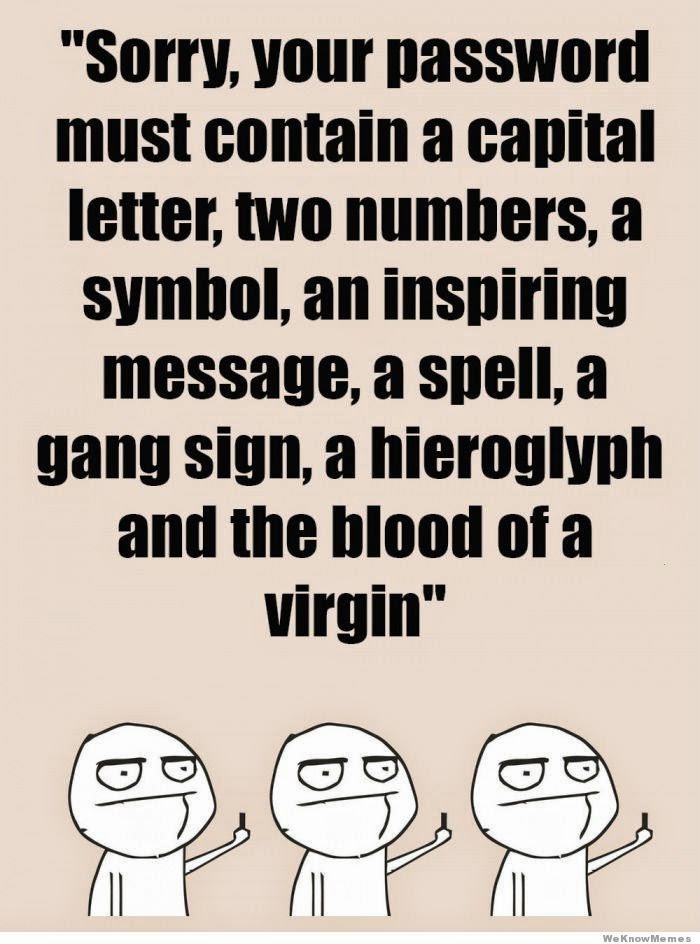
1. I'd like to be able to use more than 9 characters in a password. I'm looking at you Discover. Is space on your server so dear that an extra dozen characters or so would kill you?

2. I'd like all special characters to be OK. Really, if I can type it on a computer keyboard, you ought to be able to deal with it. It's 2014. Do you realize that if I can use symbols and special characters, my password can be shorter and just as secure? An 11 character password made up of all available characters has the same 80-bit security as a 14 character password made up of only case sensitive alphanumeric characters.

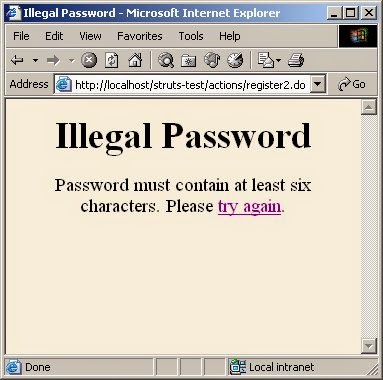
3. I'd like to know up front what your particular parameters for acceptable password length and composition are. In other words, when you tell me "At least 7 characters/1 Number" it's of no use at all when I enter 30 characters, and then you tell me that's too many. And then I enter 24 characters and again you tell me that's too many. How about just telling me "at least 7 and no more than 20?" And whether or not "special characters" are OK. Thanks CVS. Changing my password with you was almost as much fun as playing Candy Crush, and just as challenging.

4. If I want to say that my mother's maiden name was "0(jK1bBn," what's it to you? To me, it's better security than posting all kinds of personal information to be stolen by hackers the next time you leave the hen house open. Just like having a different password at every site, I kind of like too have different security question answers as well.

Finally, maybe think about not hiding the "sign out" button in a different place on every single site. If I want to play "Where's Waldo," there's an app for that.

Sincerely yours,

Rob Falk

Thursday, April 17, 2014

Annoyed By Facebook's Automatically Playing Videos?

Turn them off!

Just go to "Settings" (a little triangle in the upper right part of your window will open a drop down menu that takes you there) and look for "Videos" in the left column. (Mac users will need to use Chrome or Firefox to make the change. For unknown reasons, the "Videos" setting doesn't show up in Safari, although once you change the setting, it will work on all of your browsers.)

Make the change by clicking on "Videos" and choosing "Off"

Unfortunately, you'll need to make separate changes to your phone in order to stop the pesky buggers from running by themselves there, at least on Wi-Fi. Cousin Markie doesn't let us turn them off entirely, but at least they won't chew up your data.

Android Users: Open Facebook, open the left sidebar, and tap "App Settings."Check the "Auto-Play Videos on Wi-FI Only" box.

iOS Peeps: Open the "Settings" app, find "Facebook" (down below "Game Center") and then click on "Settings." Click the toggle next to "Auto-play on Wi-Fi Only" so that the toggle shows green.